
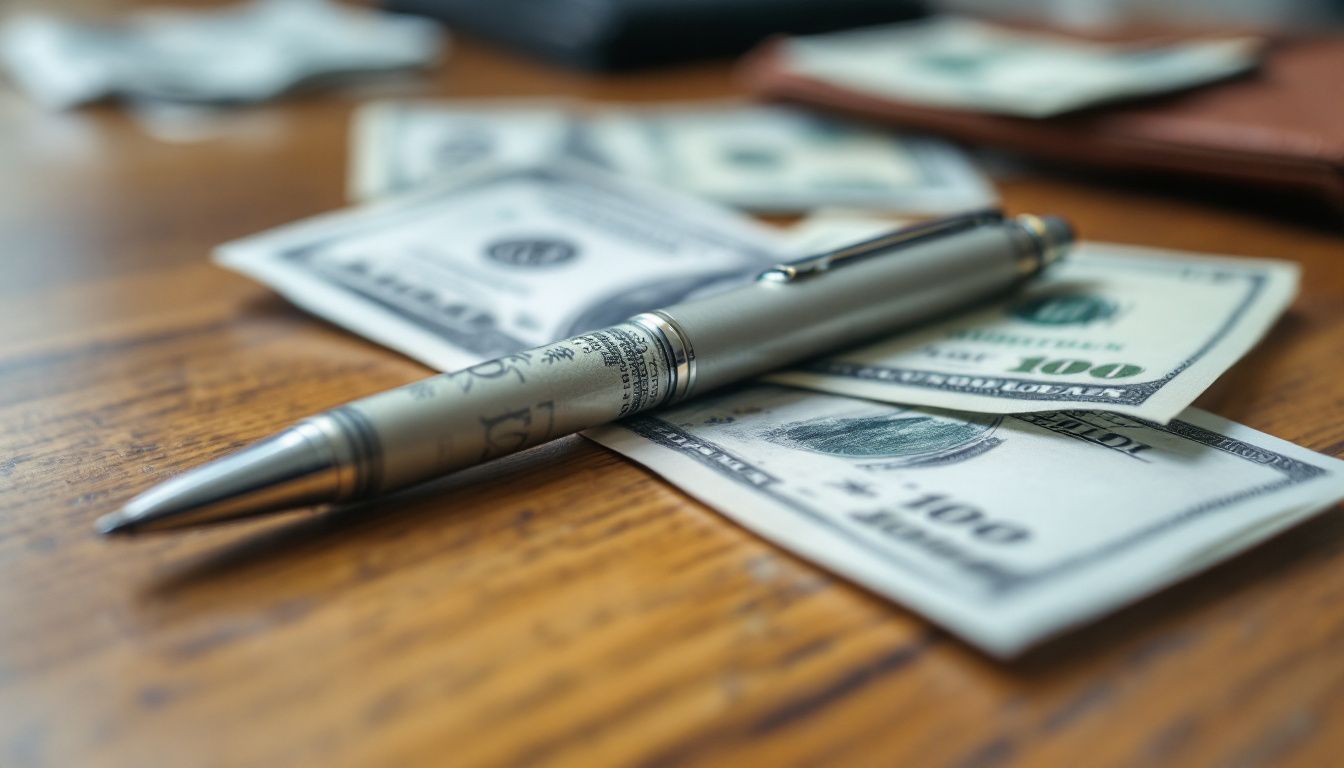
Many people worry about accepting fake bills. A Counterfeit Money Pen can spot these frauds. This post shows you how to use this tool effectively. Keep reading.
Key Takeaways
- Counterfeit money pens test a bill’s authenticity by reacting with the starch in real banknotes, leaving a dark mark if genuine and no color change on fake bills.
- There are various types of counterfeit detection tools, including basic pens, UV light detectors, dual-test markers, electronic bill counters with detection features, and portable checkers for personal use.
- To use a counterfeit money pen effectively, mark an inconspicuous area of the bill and look for color changes that indicate its authenticity; always confirm suspicions with additional checks.
- These pens have limitations and cannot detect all fake bills due to sophisticated counterfeiting methods; it’s important to also use alternative detection methods like UV lights or checking watermarks for better security.
- Regular testing of your counterfeit money pen ensures it remains effective over time; keep informed about detecting fake currency to protect your finances.
Understanding Counterfeit Money Pens
Counterfeit money pens help identify fake bills quickly and easily. These tools work by testing the ink on the bill to reveal its authenticity.
How they work
Counterfeit money pens use a simple chemical reaction to determine the authenticity of cash. These pens contain a special fluid that reacts with the starch found in legitimate banknotes.
Genuine currency often has some starch because it’s made from paper, which includes cotton and linen fibers. When you draw on the bill with a counterfeit detection pen, it will leave a mark if the bill is real.
Fake bills usually lack this starch component. Instead of turning black or dark blue, marks on these fraudulent bills remain light or show no color change at all. Using a counterfeit currency marker provides quick results for anyone checking cash during transactions.
This effective tool can help prevent losses due to counterfeit currency and enhance your fraud prevention efforts.
Types of counterfeit pens
Counterfeit money pens vary in design and effectiveness. Choosing the right one can help anyone detect fake bills more accurately.
- Basic Fraud Prevention Pen: This type reacts to the paper’s composition. When you mark a bill, it should leave a dark mark if the bill is genuine. Fake currency often fails this test.
- Chemical Reaction Marker: This pen detects starch in paper. Genuine currency has little to no starch content, while counterfeit bills usually do. A color change indicates authenticity or fraud.
- UV Light Detector Pen: These pens use ultraviolet light to reveal hidden security features on real bills. Users can check these features quickly. If they donât appear, the bill may be fake.
- Dual-Test Marker: Some counterfeit money detectors combine features of both chemical reaction and UV detection markers. They offer multiple ways to verify currency authenticity, making them highly effective tools.
- Electronic Bill Counter with Detection Features: These devices automatically verify bills as they count them. They provide fast and efficient detection of counterfeit money while also saving time for businesses that handle cash frequently.
- Portable Fake Bill Checker: Compact and lightweight, these tools allow users to check bills anywhere easily. Their small size makes them convenient for personal finance enthusiasts who often handle cash transactions.
Using any of these counterfeit money detection tools increases the chance of spotting fraudulent currency before accepting it as payment.
Using a Counterfeit Money Pen
Using a counterfeit money pen is straightforward. Start by marking an inconspicuous area of the bill and check its reaction for signs of authenticity.
Step-by-step guide
You can easily use a counterfeit money pen to detect fake bills. Follow these steps for accurate results.
- Gather your materials. You need a counterfeiting money pen and the bill you want to check. Ensure the pen works properly before starting.
- Examine the billâs surface. Look for any visible signs of wear or damage. Fake bills may have unusual textures.
- Choose an inconspicuous area on the bill to mark it. The corner or a small edge works well since it wonât affect the bill’s appearance much.
- Make a mark with the counterfeit currency pen on that spot. A dark line will appear if the bill is real, indicating its authenticity.
- Check for color changes in your mark after applying pressure from the pen. A clear yellow or light color shows a genuine bill, while dark marks indicate fake currency.
- Wait briefly for any reactions to develop fully on the marked area before making a final judgment.
- If unsure, repeat with other areas of the bill or try another counterfeit money checker for confirmation.
- Always double-check high-value bills since they are more likely targets for counterfeiters.
- When using this technique, trust your instincts about any suspicious bills that show unclear markings or abnormalities despite passing initial checks.
- Regularly test your counterfeit bill detection pen to ensure it remains effective over time.
Where to mark the bill
Mark the bill on a discreet area, preferably in one of the corners. Use the counterfeit money pen to draw a line or make a small dot. This approach keeps your mark subtle and allows for easy checking while not impairing its appearance.
Focus on marking areas where security features are least affected. Look near the edges or less detailed sections. Placing marks here ensures that you wonât interfere with crucial elements like watermarks or holograms, which help confirm authenticity.
Always check after marking to interpret results accurately with your fake bill detector methods.
Interpreting the results
Interpreting the results from a counterfeit money pen is straightforward. After marking the bill, examine the inkâs color. A yellow or brown mark often indicates a fake bill. Genuine bills typically show no discoloration or only leave a light mark that fades quickly.
If you see a dark mark, do not accept that bill as real currency. Counterfeit money markers are effective, but they can miss some sophisticated fakes. Always cross-check with other detection methods for more accuracy in verifying cash authenticity.
Use these tools wisely to protect your finances and avoid losing money on fake currency.
Limitations and Alternatives
Counterfeit money pens have some downsides. They can’t catch every fake bill. Other methods, like using UV light or checking for watermarks, can help too.
Limitations of counterfeit pens
Counterfeit pens have some limitations. They cannot detect all types of counterfeit money. Some fake bills use special inks or papers that pass the pen test. Many counterfeit bill markers rely on a simple chemical reaction with the paper’s starch.
If the paper does not contain real currency fibers, the pen may give a false positive.
Fake currency detection pens also do not work well on older bills, especially those made before 1996. Changes in printing technology mean that only newer bills have security features detectable by these tools.
Relying solely on counterfeit detection methods like these can lead to mistakes and losses for personal finance enthusiasts trying to spot fake currency effectively.
Alternative methods for detecting fake bills
Detecting fake bills requires more than just a counterfeit money pen. Several reliable methods can help you ensure the authenticity of currency.
- Use a UV light scanner. Genuine bills contain special markings that only show up under ultraviolet light. This method can quickly reveal if a bill is fake.
- Feel the texture of the bill. Real money has a unique texture due to its cotton and linen blend. Fake bills often feel smooth or rubbery.
- Examine the watermark closely. Most legitimate bills have a visible watermark that matches the portrait on the note. This feature provides an additional layer of security that counterfeiters struggle to replicate.
- Check the security thread embedded in the bill. Authentic currency has a thin, metallic strip running through it that is hard to reproduce in fake versions. Rubbing your fingers over this thread will make it easily detectable.
- Look for color-shifting ink on larger denominations. The ink changes color when tilted, making it difficult for counterfeiters to mimic this feature convincingly.
- Scan for micro-printing on genuine bills. Tiny text appears on various locations throughout real currency, such as around portraits or borders, and it’s not easy to duplicate accurately.
- Use a counter-check service available at many retail locations or banks, which can validate notes using advanced detection technology beyond what a simple pen offers.
- Trust your gut instincts about suspicious bills without any hesitation; if something feels off about a currency note, do not accept it until you confirm its legitimacy with these methods.
Using these alternative methods enhances your ability to detect fake currency effectively!
Conclusion
Using a counterfeit money pen can help you spot fake bills quickly. This simple tool provides instant feedback on the authenticity of currency. Mark the bill in the right place and check for color changes.
Be aware that these pens have limitations, so itâs wise to use them alongside other methods. Stay informed and protect your finances by knowing how to detect counterfeit money effectively.
FAQs
1. What is a counterfeit money pen?
A counterfeit money pen, also known as a fake currency detection pen or money authenticity pen, is a tool used to detect if bills are genuine or not.
2. How do I use a counterfeit money pen to detect fake bills?
To use the fake currency detection pen, you simply mark on the bill. If the ink turns black or dark brown, it means that the bill may be fake.
3. Can any type of marker serve as a counterfeit detector?
No, regular markers cannot identify counterfeits; only a specialized tool like the fake money detector marker can accurately determine whether cash is authentic.
4. Is using this method reliable for detecting all types of counterfeit currency?
While these pens can help spot some fakes, they aren’t foolproof and should ideally be used in conjunction with other methods for best results.