
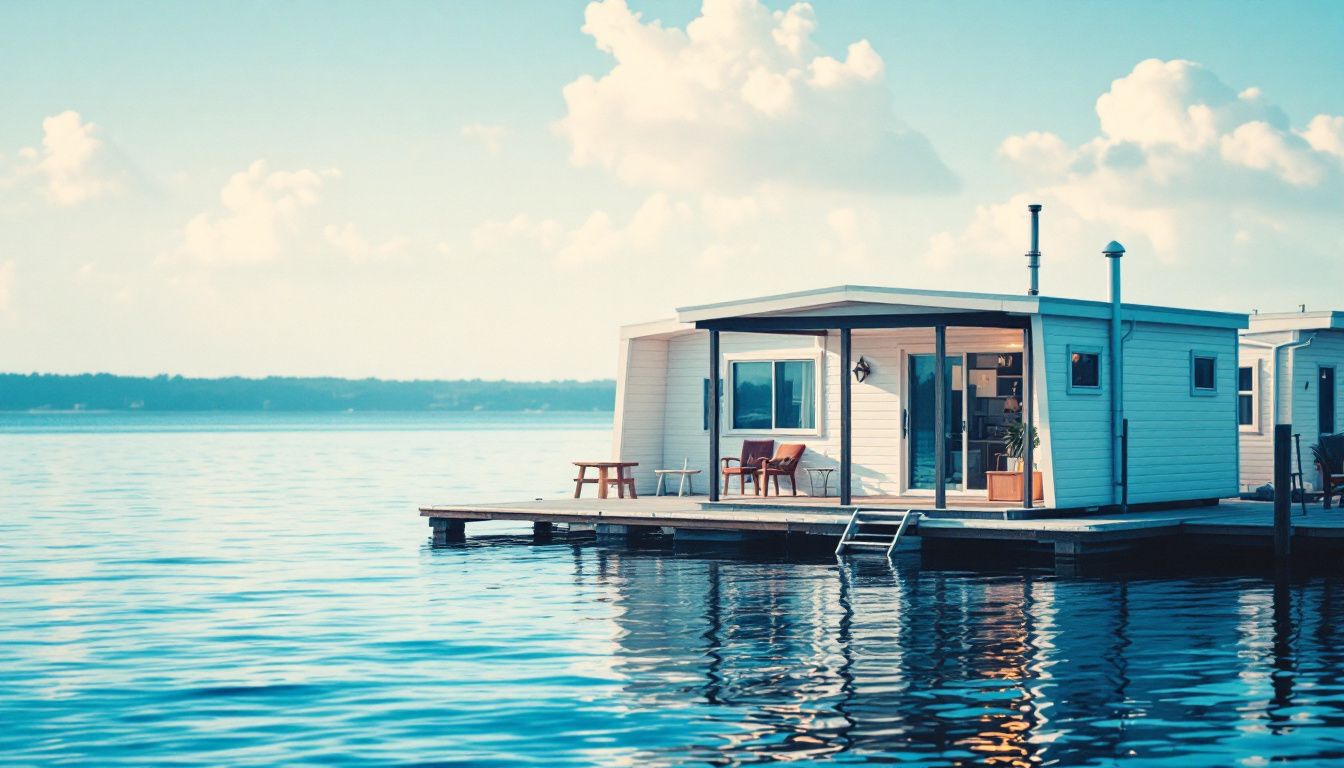
Many people dream of living on the water, but finding the right financing can be hard. A floating home mortgage is different from a traditional house loan. This post will guide you through getting a mortgage for a floating home.
Learn more below.
Key Takeaways
- Floating homes and houseboats offer unique living experiences on the water, with floating homes being more permanent and often connected to utilities.
- Financing a floating home involves different challenges than traditional home mortgages, requiring potential buyers to explore options like marine loans, personal loans, or working with specialized lenders.
- Living in a floating home comes with pros such as beautiful views and waterfront activities but also cons like higher maintenance needs and fluctuating property values due to location risks.
- Before getting a loan for a floating home, it’s important to consider factors such as your credit score, down payment amount, loan limits and rates offered by various lenders.
- Comparing financing options shows that floating home loans typically have higher down payments and interest rates compared to traditional home loans due to perceived risks by lenders.
What Are Floating Homes and Houseboats?
Floating homes are permanent residences built on water. Houseboats, on the other hand, serve as boats that can be moved from one location to another.
Definition and differences between the two
Floating homes and houseboats both offer unique ways to live on the water, but they have distinct differences. A floating home is a structure that resembles a traditional house, built on a platform that floats.
These homes often connect to utilities like water and electricity, making them more permanent living options. Houseboats serve as boats with living quarters onboard but are usually used for recreation or short-term stays.
Living in a floating home provides advantages like stability and access to waterfront property while avoiding some of the constraints of boating life. In contrast, houseboats can be mobile and allow for exploration of various waterways, but they may not offer the same amenities as stationary homes.
Understanding these differences helps potential buyers make informed choices about financing their dream aquatic lifestyle.
Pros and Cons of living in a floating home
Living in a floating home can be an exciting experience. It offers a unique lifestyle and different financial considerations.
- Beautiful views surround floating homes. Residents enjoy stunning sunrises and sunsets on the water daily.
- Unique living spaces provide charm. Many floating homes showcase creativity and personal style, making them stand out from traditional houses.
- Maintenance of a floating home can require specialized skills. Homeowners might need to deal with marine cleaning products and boat repairs.
- Access to waterfront activities is a major perk. Kayaking, fishing, and swimming are often just steps away.
- Property values may fluctuate more than traditional real estate due to location risks like storms and flooding.
- Community life can be vibrant among fellow boaters and homeowners by the water, fostering friendships that many find fulfilling.
- Floating home financing options differ from land-based mortgages. Traditional lenders may not cover aquatic properties, requiring specialized marine mortgage lenders or houseboat loans instead.
- Insurance needs vary greatly for floating homes compared to standard houses, as floating home insurance must address unique risks like water damage or sinking.
Living on the water combines adventure and challenges in one package for those interested in this lifestyle choice.
Financing Options for Floating Homes
Financing a floating home can be challenging but offers various options. People often explore traditional loans, marine loan brokers, or personal loans tailored for unique housing situations.
Traditional lenders
Traditional lenders offer a range of options for financing floating homes and houseboats. Many banks, credit unions, and mortgage companies provide loans specifically for these unique properties.
These lenders assess your credit score to determine eligibility. They often require a larger down payment compared to traditional home loans due to the specialized nature of waterfront living.
Loan terms may differ from standard mortgages as well. Rates can vary based on factors like location and property type. Buyers need to explore their options carefully when considering financing through traditional lenders for houseboat loans or other aquatic living expenses.
Home equity line of credit
A Home Equity Line of Credit (HELOC) allows homeowners to borrow against their homeâs equity. This option offers flexibility for those considering a floating home purchase. Borrowers can access funds as needed, making it easier to cover costs associated with unique home financing.
Lenders typically base your credit limit on your home’s appraised value and remaining mortgage balance. Interest rates often vary, so shop around for the best houseboat loan rates.
Use this financing method wisely to fund improvements or manage expenses related to waterfront property financing.
Personal loans
Personal loans can be a useful option for financing your floating home. These loans usually do not require collateral, making them appealing to many buyers. You can take out a personal loan through banks, credit unions, or online lenders.
The flexibility of these loans allows you to use the funds for various purposes related to your houseboat financing.
Interest rates on personal loans vary based on several factors, including your credit score and income level. Borrowers with good credit often receive lower rates. Many lenders offer sums ranging from $1,000 to $100,000 or more.
This amount may cover initial costs such as deposits or renovations needed for marine real estate like floating homes and houseboats.
Marine loan brokers
Marine loan brokers specialize in helping buyers secure financing for floating homes and houseboats. They understand the unique needs of clients looking to invest in nautical properties.
Brokers have established relationships with lenders who provide specialized home loans tailored for water-based living.
These professionals guide borrowers through the mortgage process. They help navigate options like boat loans or dockside housing loans. Working with a marine loan broker can simplify applying for waterfront mortgages.
Their expertise ensures you find suitable financing that fits your lifestyle and budget.
Things to Consider Before Getting a Loan
Before securing a loan for a floating home, assess your credit score and determine how much money you can put down. Understand the loan limits that lenders impose and research interest rates carefully.
These factors play a vital role in shaping your financing options. Explore everything you need to know about securing financing for your dream aquatic lifestyle.
Credit score
Credit scores play a significant role in securing financing for floating homes. Lenders use these scores to measure a borrower’s creditworthiness. A high score often leads to better loan terms and lower interest rates.
Borrowers with lower scores might face challenges when applying for unique lifestyle financing, including marine loans or RV loan options.
Maintaining a good credit score requires responsible financial behavior. Pay bills on time and keep credit card balances low. Checking your credit report regularly can help you spot errors that may affect your score.
Solid credit will open doors to more affordable waterfront home insurance and competitive rates on riverfront mortgage options.
Down payment and assets
A down payment for a floating home usually ranges from 10% to 20%. This percentage can vary based on the lender. Lenders might require evidence of your assets. Strong financial backing improves your chances of getting approved.
Floating homes differ from traditional houses in their financing needs. Some lenders view them as higher-risk investments. Others may treat them like recreational vehicles or boats, which affects loan terms and rates.
Having liquid assets can help you secure better options in this niche market. Consider your financial situation carefully before pursuing any loans associated with nautical property investments or houseboat financing.
Loan limits and rates
Loan limits and rates play a critical role in floating home mortgages. Understanding these factors helps potential buyers make informed decisions.
- Floating home loans often have lower limits compared to traditional mortgages. Lenders typically set limits based on the property’s value and condition.
- Most lenders consider the unique structure of floating homes when determining loan amounts. This can affect how much you can borrow.
- Interest rates for floating home financing may fluctuate depending on the lender’s policies. Rates can vary widely, so comparing offers is essential.
- Certain lenders specialize in boat house financing, which might provide more favorable rates and terms. Finding these niche lenders could save you money over time.
- Loan-to-value (LTV) ratios impact your financing options significantly. The ratio determines how much of your purchase price you can finance versus what you must pay upfront.
- Many lenders require a higher down payment for floating homes than for standard houses. Expect to put down 20% or more if you go this route.
- It’s crucial to check your credit score before applying for a loan. A higher score often leads to better rates and loan conditions.
- Floating home mortgages may include variable interest rates that change over time, affecting monthly payments and overall costs.
- Some lenders offer fixed-rate options as well, providing stability in your payments for the duration of the loan term.
- Comparing different financing methods like marine loans or personal loans is wise to find the best fit for your needs and budget for water-based home ownership options.
The Bottom Line: Floating Homes Offer Unique Living on the Water
Floating homes provide a distinct lifestyle right on the water. They offer a unique experience that differs from traditional housing, making them an intriguing choice for many people.
How to purchase a floating home
Purchasing a floating home can be an exciting adventure. The process involves several steps to ensure a smooth transition to living on the water.
- Assess your budget. Determine how much you can afford for a floating home. Consider additional costs such as insurance, dock fees, and maintenance.
- Research locations. Different areas offer unique experiences for floating home ownership. Explore neighborhoods with good access to amenities and services.
- Identify your preferred type of floating home. Houseboats and floating homes have different features and functions. Decide which suits your lifestyle best before buying.
- Secure financing options early. Look at traditional lenders, marine loan brokers, or personal loans for potential help in funding your purchase. Make sure to compare rates and terms thoroughly.
- Obtain a pre-approval letter from a lender if needed. This document gives you an idea of your borrowing power when shopping for a floating home.
- Work with real estate agents familiar with water-based properties. Agents experienced in this niche can provide valuable insights into the market and available listings.
- Schedule viewings of potential homes on the water within your budget range. Take time to explore each option closely, checking for structural integrity and overall condition.
- Prepare to make an offer once you find the right floating home that fits your needs and desires well within budget constraints.
- Conduct thorough inspections before finalizing any purchase agreements or contracts on the property of choice.
10.Understand zoning laws related to floating homes in your desired area as they vary by municipality, influence where you can dock, live, or even sell later down the line.
11.Complete all necessary paperwork meticulously during closing procedures so there are no surprises after taking ownership of the new property on water!
12.Enjoy settling into your new aquatic lifestyle! Embrace unique living situations that come with water-based home ownership while adjusting to life on the waves!
Key considerations
Floating homes offer a unique lifestyle on the water. They bring special considerations for potential homeowners.
- Understand zoning laws. Floating homes often reside in specific areas with regulations. Research local laws before making a decision.
- Assess insurance needs. Standard homeowner’s insurance may not cover floating homes or houseboats fully. Check options that cater to your type of water-based home ownership.
- Review maintenance costs. Living on the water can lead to unique wear and tear. Factor in regular maintenance for upkeep.
- Examine loan types available for floating homes. Traditional mortgages might not apply here, so explore boat loan options and marine financing.
- Consider resale value potential. Floating homes may not appreciate like land-based properties do, affecting long-term investment value.
- Evaluate utility access and services available on the water. Accessing resources like electricity and water can differ significantly from traditional housing.
- Investigate community amenities nearby. Living in a floating home often means being part of a marina or lake community, which can vary widely in offerings.
These key considerations play an essential role when seeking floating home mortgages and financing options while navigating this unique lifestyle choice on the water.
Comparison to traditional home loans
Comparing financing options for floating homes to traditional home mortgages reveals distinct differences in the process and available choices. Below is a summarized comparison in a table format for those interested in personal finance.
| Aspect | Floating Home Loans | Traditional Home Loans |
|---|---|---|
| Lenders | Specialized lenders, marine loan brokers | Banks, credit unions |
| Type of Loans | Marine loans, personal loans | Mortgages, FHA loans |
| Down Payment | Higher, often 20-30% | Lower, can be 3-20% |
| Interest Rates | Generally higher due to perceived risk | Comparatively lower, especially with good credit |
| Loan Terms | Can vary, often shorter than mortgages | Fixed, commonly 15-30 years |
| Credit Score Impact | Significant, high credit score needed | Significant, but options available for various scores |
| Loan Limits and Rates | Subject to lender’s discretion and boat value | Conforming loan limits apply, rates set by market |
This table showcases the main financial aspects to consider for those weighing the options between a unique lifestyle on the water and a more conventional home ownership path.
FAQs
1. What is a floating home mortgage?
A floating home mortgage is a type of financing for water-based home ownership, similar to traditional mortgages but specifically designed for homes on the water.
2. How does financing work for floating homes?
Financing for floating homes works much like standard mortgages, with specific considerations given to the unique aspects of living on the water and potential RV loan alternatives.
3. Are there different options available when it comes to financing a floating home?
Yes, there are several options available including typical mortgages or RV loan alternatives depending on your specific situation and needs in relation to water-based home ownership.
4. What should I consider before applying for a floating home mortgage?
Before applying, you need understanding about various aspects such as insurance requirements, docking fees, maintenance costs associated with living on the water along with regular factors like interest rates and repayment terms.